
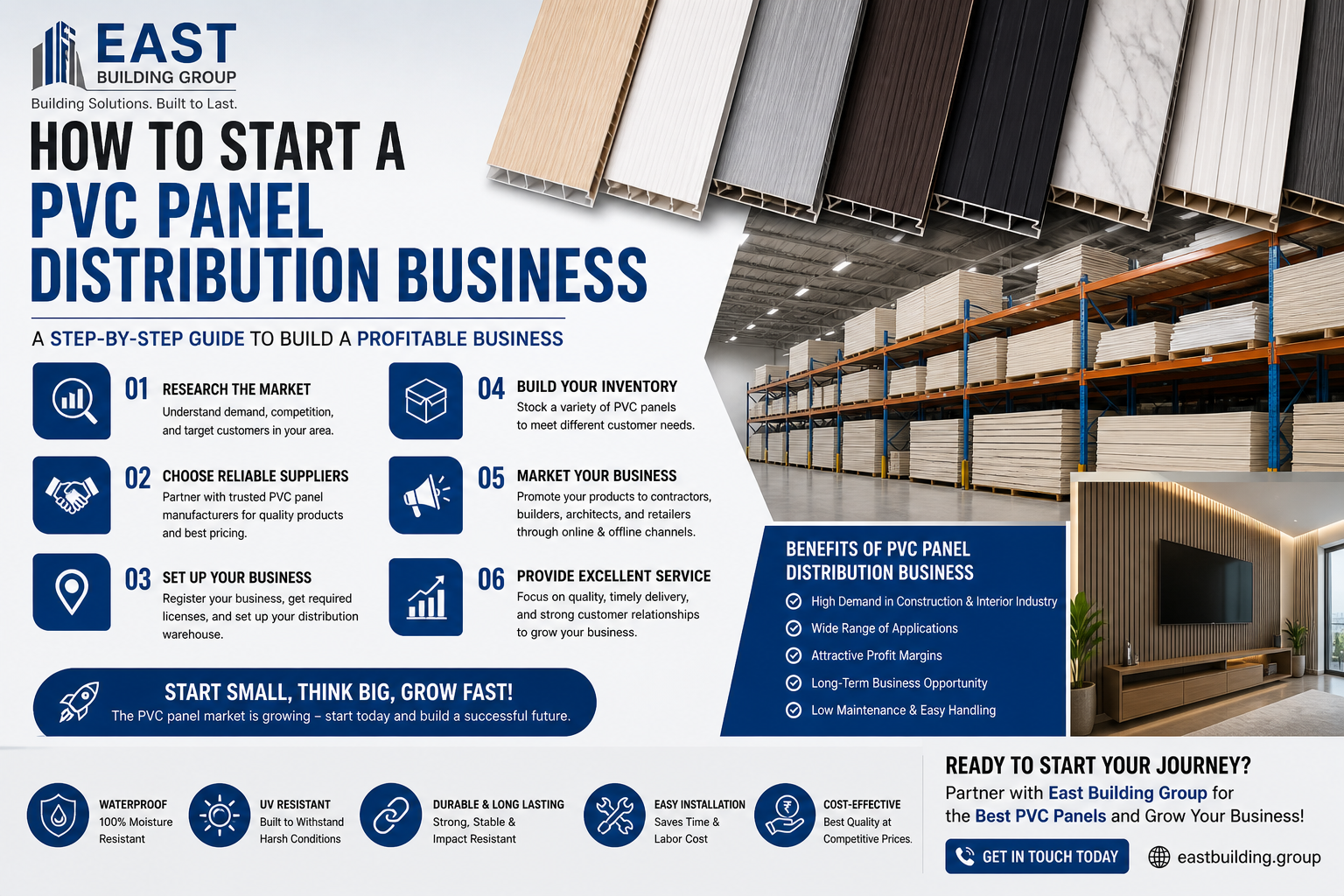
The interior design market is slowly changing – and PVC panels are at the center of it. The construction industry now prefers using modern wall materials, which provide faster installation times and lower expenses compared to traditional building materials. However, the majority of businessmen ignore the distribution aspect of this booming business.
This business provides consistent B2B demand, which requires minimal production work while enabling healthy growth of profit margins. The actual business potential exists through efficient distribution methods for PVC panels.
The guide provides detailed instructions for establishing a PVC panel distribution business, which includes supplier selection and dealer network development to achieve business success.
Why PVC Panel Distribution is Growing Rapidly
The construction industry and interior design field both require PVC panels, which have become essential materials for their work.
Key growth drivers:
- Increasing need in affordable interior solutions.
- Quick installation over traditional materials.
- Increasing use in commercial spaces, offices, and retail
- Waterproof and no-maintenance features.
- Expansion in real estate and renovation work.
This makes PVC panel distribution a high-demand, repeat order business.
Step-by-Step Guide to Start a PVC Panel Distribution Business
You need to understand demand patterns before investing a single dollar. These steps will help you ensure that you are getting into a market that can maintain stable sales.
Step 1 – Understand the Market Demand
You need to define your target customers and their purchasing reasons before starting your PVC panel distribution business.
You need to have strong demand knowledge because it helps you choose the right products to sell and the correct customers to approach.
Focus on:
- Local demand in construction and interior markets
- Types of buyers:
- Interior designers
- Contractors
- Builders
- Retail hardware shops
Popular product categories:
- Wall panels
- Ceiling panels
- Decorative panels
- Execution Tip: Go to the local markets and speak to 10-15 dealers. Field work > web-based studies.
Step 2 – Find Reliable PVC Panel Suppliers
Your supplier determines your margins, quality, and consistency. Selecting an wrong supplier will result in early harm to your business reputation.
Look for:
- Manufacturers with consistent quality
- Free shipping and discounts.
- Variety in designs and finishes
- Delivery reliability
Sourcing options:
- Direct manufacturers
- Regional wholesalers
- Trade exhibitions
- Pro Tip: Begin with 2 – 3 suppliers to eliminate the risk of dependency.
Step 3 – Legal Compliance & Business Registration
Get your business in good standing with the law. This helps to create trust and avoid future problems.
Key requirements:
- Registration of a business (proprietorship/LLP/Pvt Ltd.).
- GST registration (important for B2B)
- Trade license (if required)
- MSME/Udyam registration
Why it matters:
- Enables proper billing
- Establishes supplier trust.
- Helps in tax benefits and loans
- Pro Tip: The majority of dealers want to deal with distributors who are GST-registered.
Step 4 – Set Up Your Distribution Infrastructure
This step determines your operational efficiency and growth potential. A proper setup enables quick delivery of items and maintains continuous inventory movement.
Basic requirements:
- Storage area (godown or rented warehouse)
- Transportation (own vehicle or third-party logistics)
- Inventory management system
Keep in mind:
- Panels should be handled carefully not to break.
- Arrange stock according to size and design to make speedy dispatches.
Step 5– Build Your Dealer & Contractor Network
Distribution exists as a business that relies on establishing relationships. Your network directly impacts your sales volume.
Start with:
- Hardware stores
- Interior designers
- Local contractors
- Builders
Acquisition strategies:
- Offer competitive pricing
- Provide samples and catalogs
- Offer discounts or credit.
- Visit sites personally
- Key Insight: Trust generates repeat orders because it exists beyond price alone.
Step 6 – Pricing Strategy & Margin Planning
The distribution business of PVC panels relies on intelligent pricing to make a profit.
You need to create a balance between being competitive and sustainable in margins.
Consider:
- Purchase cost from supplier
- Storage and transportation expenses.
- Market competition pricing
Typical margin range:
- 10 – 25% according to product volume and exclusive distribution agreements.\
Strategies:
- Discounts on bulk purchases.
- A little more margin on high-end designs.
- Flexible pricing for repeat clients
Common Mistakes to Avoid in PVC Panel Distribution
Even good businesses fail due to avoidable errors.
Watch out for:
- Choosing low-quality suppliers (damages reputation)
- Overstocking slow-moving designs
- Ignoring relationship building
- Weak credit control with dealers.
- Competing only on price (race to the bottom)
Running your business without these errors will provide you with a better competitive advantage.
Conclusion
Starting a PVC panel distribution business is not capital-heavy, but it is strategy-heavy. You can create a reliable B2B revenue stream through effective supplier selection, robust distribution network development, and proper pricing strategies.
The market already has existing demand. The market is expanding. This is just a matter of whether you place yourself early or not.
Ready to get started? Partner with Eastbuilding, a trusted name in high-quality PVC panel solutions.
FAQs
Is PVC panel distribution a profitable business?
Yes, it provides margins of 10-25% and regular orders by contractors and builders.
How much investment is required to start a PVC panel business?
It may begin with an average investment based on the size of the inventory and store configuration.
Who are the primary customers of PVC panel distributors?
Key purchasers include interior designers, contractors, builders, and hardware retailers.
Can I scale this business online?
Yes, through online resources, such as Google directories, WhatsApp marketing, and B2B.
