
A warehouse roof is not something you notice – until it falls apart. One leak during a heavy downpour. One corroded sheet in a chemical storage bay. All of a sudden there is a damaged inventory, a stopped operation, and an emergency repair bill on the table. By this time, no one is concerned about the appearance of the roof. They’re asking why it didn’t hold.
Most facility managers underestimate the risk at the point where a roofing material decision is made. When you are specifying or replacing the roofing of an industrial warehouse, this is what the real-world data and decades of on-site performance tell you about PVC roofing sheets.
Why Roofing Matters More Than You Think
A warehouse is not a covered area only. It is a work environment that is hot, deals with chemicals, bears great structural loads, and has to withstand outdoor weather on a daily basis. All that should be handled by the roof over that, quietly, dependably, and decade to decade.
The majority of roofing failures do not occur in a dramatic manner. They occur over time – a crack in the hair, a rust spot, or a seam that was not firmly closed. By the time it can be seen inside, the damage to the structure, the insulation, and, in some cases, the inventory beneath is already accomplished.
That’s the true cost of the wrong material. Not only the repair but the cascade that ensues.
Why PVC Roofing Sheets Work at Industrial Scale
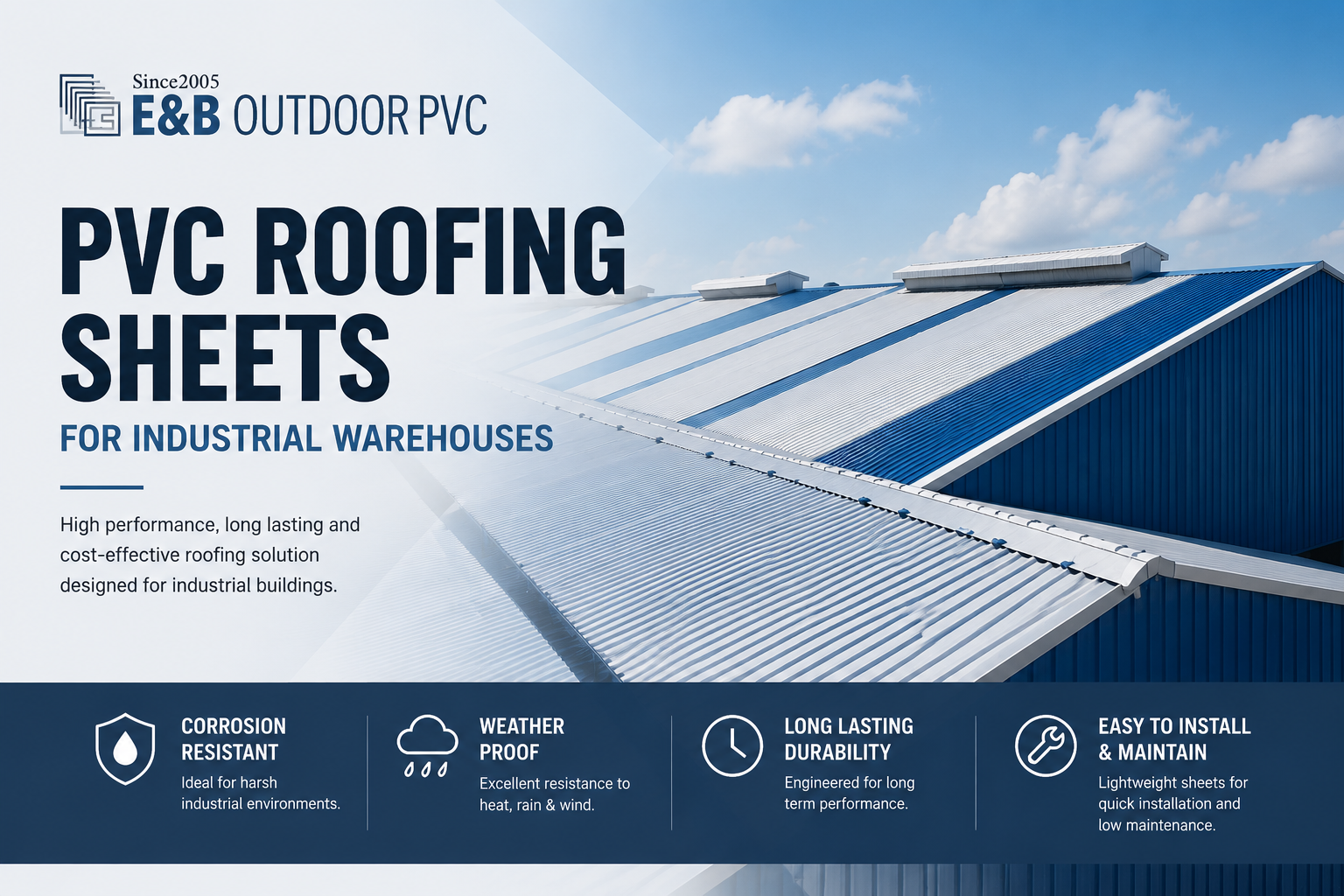
PVC roofing has been used in industrial and commercial construction for over 50 years. The material has earned that track record by performing in environments where other options fail. Here is what sets it apart when you’re covering thousands of square meters of warehouse space:
- Chemical and corrosion resistance: PVC roof panels protect against acids and ammonia and industrial fumes and oils and salt spray because they maintain their structure and performance, which makes them appropriate for chemical storage and food processing and coastal facility usage.
- Waterproof: The sheets are heat-welded to form seams that are stronger than the panels themselves. No adhesives. No gaps. Not even a drop of water.
- 60–70% lighter than metal: The structure requires less weight, which reduces the structural needs of your steel framework and decreases your total costs for large-span warehouse roofing systems.
- Energy efficient: The reflective surface reduces internal building heat absorption. The system provides measurable cooling cost savings for the entire facility because many PVC systems meet ENERGY STAR certification requirements.
- Fire resistant: PVC is self-extinguishing. This important industrial safety feature provides major benefits for companies that need to follow safety regulations.
The global PVC roofing sheet market reached a value of USD 4.7 billion in 2024, which included warehousing as one of its most rapidly expanding end-use sectors. The worldwide procurement practices show no signs of changing because they have demonstrated reliable performance to users throughout many years of operation.
The Real Issue: When a Low-Cost Roof Becomes the Most Expensive Decision
Many warehouse operators choose roofing based only on upfront cost. The approach seems practical at first, but it creates unanticipated costs that increase throughout the project.
Metal sheets can begin to fail after 5 to 7 years of use in coastal areas and chemical-intensive locations. The process of replacement requires spending on new materials and paying for worker costs, which results in operational downtime.
PVC roofing lasts approximately 20 to 30 years because it requires minimal upkeep. The system requires only basic inspections and periodic cleaning. The initial investment costs more, but customers will save more money throughout their entire ownership period.
Weaker roofs create hidden dangers because they allow leaks to damage inventory and interrupt business operations. PVC roofing provides significant risk reduction, although no solution exists that can eliminate all dangers.
Questions You Should Ask a Supplier Before You Order
The performance of PVC roofing sheets varies between different products because their true characteristics become apparent only after they are installed. PVC roofing systems use industrial-grade materials that contain multiple UV-protected layers and calcium-zinc stabilizers. Budget variants can look identical on a product sheet but degrade years earlier in the field.
Before you source, these are the questions worth asking any supplier:
- Which certified test results do you have that prove your UV and chemical and weather resistance capabilities beyond your spec sheets?
- Is your product certified through ISO standards, and does it meet all fire-rating regulations needed for commercial and industrial construction projects?
- Can you complete large-volume orders within the required project timeframe while maintaining the same product quality throughout your production process?
Conclusion
Warehouses in industries work under harsh conditions. Their roof should be aligned with that fact, not only on handover, but many years later. PVC roofing sheets provide the chemical resistance, waterproofing, energy efficiency and long-term durability which actually is needed in the warehouse environment.
When you are specifying roofing in a new warehouse or need to replace the roofing, the PVC roofing line offered by East Building is specifically designed to be used in an industrial setting. Reach out to the East Building team for product certifications, technical specs, and bulk pricing
FAQs
How long do PVC roofing sheets last on an industrial warehouse?
PVC roofing sheets have a life of 20 to 30 years with proper installation and regular maintenance. Multi-layer industrial versions, which are UV-stabilized, have always worked at the high end of that range, even in extreme chemical or coastal conditions.
Are PVC roof panels suitable for chemical storage warehouses?
Yes, PVC is especially suggested in chemical exposure conditions. It is impervious to acids, ammonia, industrial fumes, and salt spray and does not corrode.
How does PVC roofing compare to metal sheets for warehouses?
PVC is more resistant to corrosion, chemical tolerance, and long-term maintenance costs than metal. The metal sheets are generally cheaper initially; however, they corrode more easily and quickly in high humidity and corrosive environments.
Can PVC roofing handle extreme weather conditions?
Yes. PVC roofing is extremely wind-resistant due to its heat-welded seams, some of which are tested up to Category 3 hurricane strength.
