
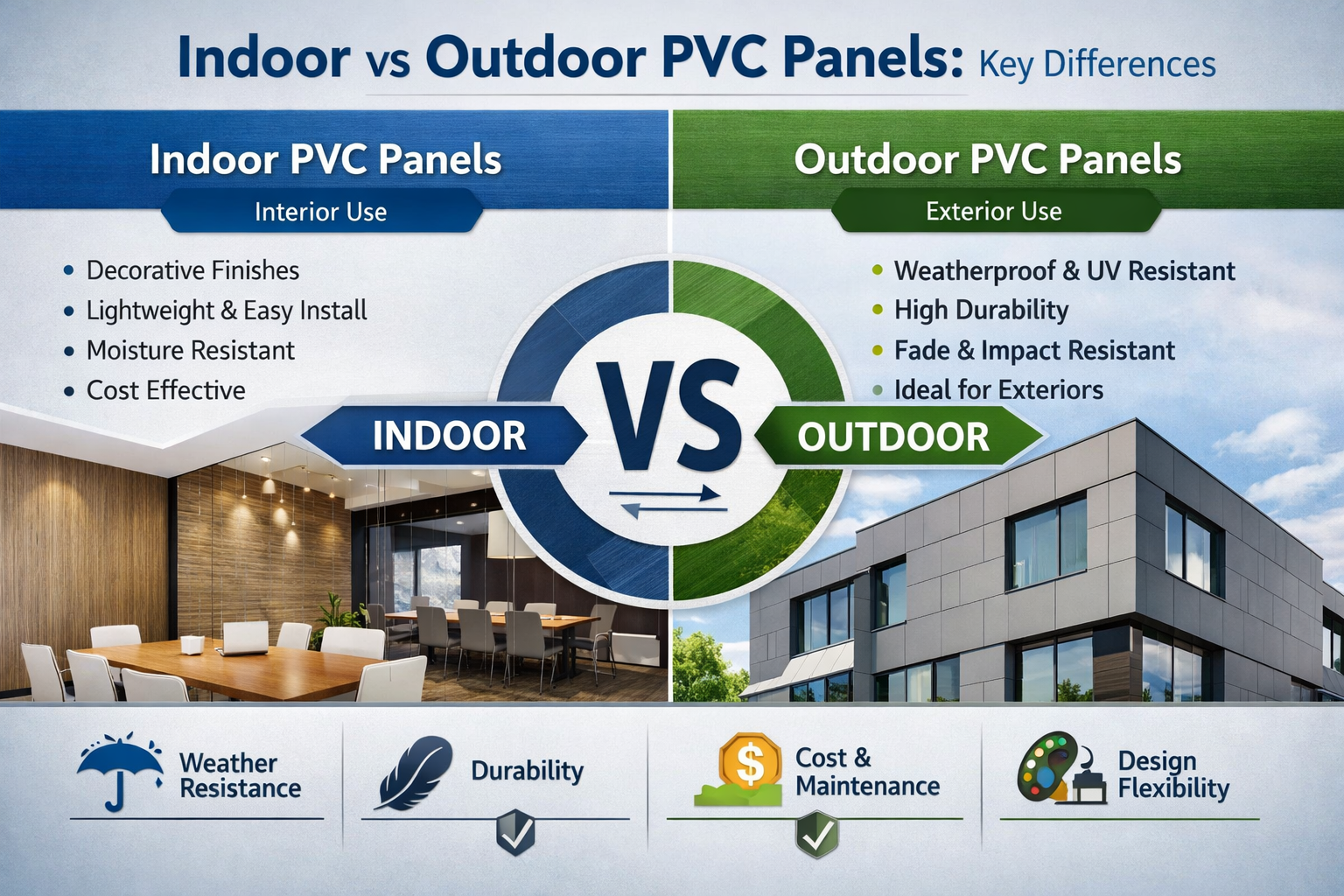
Introduction
In today’s construction and interior design industry, PVC panels have emerged as a versatile, cost-effective, and durable alternative to traditional materials like wood, metal, and plaster. From modern office interiors to large-scale industrial exteriors, businesses are increasingly adopting PVC panels for their flexibility and long-term value.
However, one of the most common challenges faced by contractors, architects, and procurement teams is choosing between indoor and outdoor PVC panels. While both serve similar structural and aesthetic purposes, their composition, durability, and application differ significantly.
In this comprehensive guide, we will explore the key differences between indoor and outdoor PVC panels, helping B2B buyers make informed decisions. Whether you’re sourcing from an Indoor PVC Panels Supplier or evaluating options from an Outdoor PVC Panels Supplier, this blog will provide actionable insights to guide your purchase.
Understanding PVC Panels: A Quick Overview
PVC (Polyvinyl Chloride) panels are lightweight, durable, and water-resistant materials used for wall cladding and ceiling solutions. They are widely used in residential, commercial, and industrial projects due to their:
- Low maintenance requirements
- Resistance to moisture and termites
- Easy installation process
- Cost efficiency compared to traditional materials
PVC panels are broadly categorized into two types:
- Indoor PVC Panels (Interior applications)
- Outdoor PVC Panels (Exterior applications)
Each type is engineered to meet specific environmental and functional requirements.
What Are Indoor PVC Panels?
Indoor PVC panels are designed specifically for interior applications where environmental exposure is minimal. These panels are widely used for decorative and functional purposes in:
- Offices
- Retail stores
- Hotels and restaurants
- Hospitals and clinics
- Residential interiors
Key Features of Indoor PVC Panels
- Smooth and decorative finishes
- Lightweight and easy to install
- Moisture-resistant but not weatherproof
- Available in various textures (wood, marble, matte, gloss)
- Cost-effective for large interior projects
Common Applications
- PVC wall panels interior
- False ceilings
- Partition walls
- Decorative feature walls
When working with an Interior PVC Panels Supplier, businesses often prioritize design flexibility, cost savings, and quick installation.
What Are Outdoor PVC Panels?
Outdoor PVC panels, also known as PVC Exterior Wall Panels, are engineered to withstand harsh environmental conditions such as UV exposure, rain, temperature fluctuations, and pollution.
These panels are commonly used in:
- Building facades
- Industrial structures
- Commercial exteriors
- Warehouses and factories
- Outdoor signage structures
Key Features of Outdoor PVC Panels
- UV-resistant coating
- High durability and impact resistance
- Weatherproof and waterproof
- Resistant to fading and cracking
- Strong structural integrity
An experienced Outdoor PVC Panels Supplier ensures that these panels meet stringent quality standards for long-term outdoor performance.
Indoor vs Outdoor PVC Panels: Key Differences
Understanding the differences between indoor and outdoor PVC panels is crucial for selecting the right material for your project.
1. Durability and Strength
Indoor PVC panels are designed for controlled environments, making them less robust compared to outdoor panels. On the other hand, exterior PVC panels are built to endure:
- Heavy rainfall
- UV radiation
- Temperature extremes
Conclusion: Outdoor panels are significantly more durable and long-lasting.
2. Weather Resistance
One of the most critical differences lies in weather resistance.
- Indoor Panels: Limited resistance to humidity and moisture
- Outdoor Panels: Fully weatherproof with UV protection
Outdoor panels are specifically engineered to prevent:
- Warping
- Fading
- Cracking
3. Design and Aesthetic Flexibility
Indoor panels offer greater design versatility, making them ideal for interior decor.
- Wide range of colors and textures
- Wood and marble finishes
- Glossy and matte options
Outdoor panels, while available in multiple finishes, prioritize durability over intricate aesthetics.
4. Installation Requirements
Indoor PVC panels are easier and quicker to install due to their lightweight nature.
Outdoor panels require:
- Stronger support systems
- Weatherproof sealing
- Professional installation
This makes installation costs slightly higher for exterior applications.
5. Cost Considerations
- Indoor PVC Panels: More affordable due to simpler manufacturing
- Outdoor PVC Panels: Higher cost due to advanced coatings and durability features
However, outdoor panels offer better long-term ROI due to reduced maintenance and longer lifespan.
6. Maintenance Needs
Indoor panels require minimal maintenance, mainly cleaning.
Outdoor panels are designed to withstand dirt, pollution, and environmental exposure, making them:
- Easy to clean
- Low maintenance despite outdoor use
7. Lifespan
- Indoor panels: Moderate lifespan depending on usage
- Outdoor panels: Extended lifespan due to enhanced durability
For large-scale B2B projects, choosing the right panel type can significantly impact lifecycle costs.
Choosing the Right PVC Panels for Your Project
Selecting between indoor and outdoor PVC panels depends on several factors:
1. Application Area
- Interior spaces → Indoor PVC Panels
- Exterior surfaces → PVC Exterior Wall Panels
2. Environmental Exposure
If your project involves exposure to sunlight, rain, or extreme weather, outdoor panels are the only viable option.
3. Budget Planning
For interior projects with tight budgets, indoor panels provide excellent value.
For exterior projects, investing in high-quality panels from a reliable Outdoor PVC Panels Supplier ensures long-term savings.
4. Design Requirements
- High aesthetic appeal → Indoor panels
- Functional durability → Outdoor panels
Benefits of Using PVC Panels in B2B Projects
PVC panels offer multiple advantages for businesses across industries:
Cost Efficiency
Compared to traditional materials like wood and stone, PVC panels significantly reduce material and labor costs.
Quick Installation
PVC panels are easy to install, reducing project timelines and labor expenses.
Sustainability
Many modern PVC panels are recyclable, making them an eco-friendly option for sustainable construction.
Versatility
From office interiors to industrial exteriors, PVC panels can be used across various applications.
Common Mistakes to Avoid When Choosing PVC Panels
Even experienced buyers can make errors when selecting PVC panels. Here are some common mistakes to avoid:
1. Using Indoor Panels for Outdoor Applications
This can lead to:
- Rapid deterioration
- Color fading
- Structural damage
2. Ignoring Supplier Quality
Choosing a low-quality Interior PVC Panels Supplier or outdoor supplier can compromise the entire project.
3. Overlooking Installation Requirements
Improper installation can reduce panel lifespan and performance.
4. Focusing Only on Price
Cheaper panels may lead to higher maintenance and replacement costs in the long run.
How to Choose the Right Supplier
Selecting the right supplier is just as important as choosing the right panel type.
Key Factors to Consider:
- Industry experience
- Product certifications
- Customization options
- Bulk pricing for B2B buyers
- After-sales support
A trusted Indoor PVC Panels Supplier or Outdoor PVC Panels Supplier will provide technical guidance, ensuring you select the right product for your needs.
Future Trends in PVC Panel Industry
The PVC panel industry is evolving rapidly, driven by innovation and sustainability.
Emerging Trends:
- Eco-friendly and recyclable PVC materials
- Advanced UV-resistant coatings
- Fire-retardant PVC panels
- Smart and modular panel systems
These advancements are making PVC panels even more attractive for large-scale B2B projects
Conclusion
Choosing between indoor and outdoor PVC panels is not just a design decision—it’s a strategic investment that impacts durability, cost, and long-term performance.
Indoor PVC panels are ideal for aesthetic and cost-effective interior solutions, offering flexibility and ease of installation. In contrast, outdoor PVC panels are engineered for strength, weather resistance, and longevity, making them essential for exterior applications.
For B2B buyers, the key lies in understanding project requirements, environmental conditions, and supplier reliability. By partnering with the right Interior PVC Panels Supplier or Outdoor PVC Panels Supplier, businesses can ensure optimal performance and value.
Final Thought:
Invest wisely in the right type of PVC panel today, and you’ll save significantly on maintenance, repairs, and replacements tomorrow.
If you’re planning a project and need expert guidance, now is the time to consult a trusted supplier and choose the right PVC solution tailored to your business needs.
FAQs
Can indoor PVC panels be used outdoors?
No, indoor panels are not weather-resistant. It can warp, fade, or become damaged when in contact with the sun or rain.
Are outdoor PVC panels waterproof and UV resistant?
Yes, they are water resistant and UV resistant. Outdoor PVC panels are designed to resist the effects of water, sunshine, and extreme weather. This means outdoor PVC panels are perfect for exterior walls and facades.
Which is more cost-effective: indoor or outdoor PVC panels?
The initial cost of indoor panels is lower than that of outdoor panels which have higher prices but deliver extended product life and reduced upkeep requirements.
