
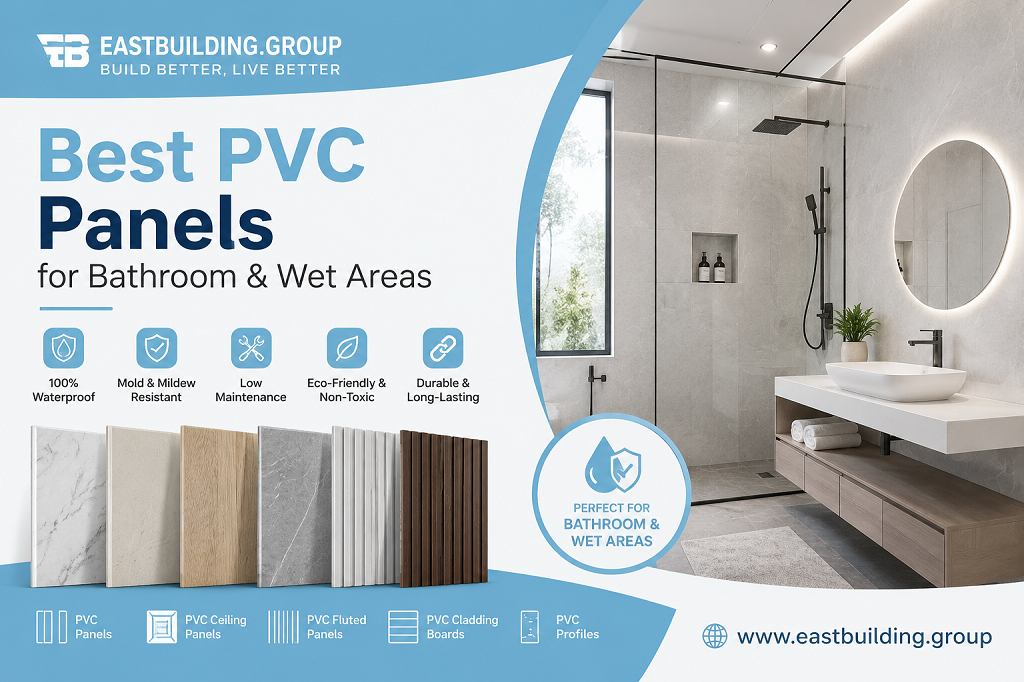
Water doesn’t announce itself. It seeps behind tiles, sits in grout lines, and works quietly – until one day you’re looking at swollen walls, black mold patches, and a repair bill that didn’t need to happen. The real issue isn’t dampness. It’s using materials that merely tolerate moisture instead of ones that are genuinely built for it.
That’s the distinction PVC panels make – and it’s not a small one. Designed from the ground up for wet environments, they’ve become the specification of choice for bathrooms, wet rooms, shower enclosures, and commercial washrooms where performance has to outlast aesthetics. This guide breaks down what to look for, why it matters, and how to choose the right product for your project.
Why Wet Areas Demand More Than Standard Wall Materials
Bathrooms and wet areas sit in a category of their own when it comes to wall performance. The combination of constant humidity, direct water contact, cleaning chemicals, and temperature fluctuation creates conditions that expose the weakness in most conventional materials – usually within just a few years.
Tile is the go-to option, but with it comes the weakness of grout. Even with the best tile-sealing, grout is porous. It absorbs water, creates mould and turns yellow – all of which means it needs to be resealed or eventually regrouted. PVC panels avoid this issue. The tongue-and-groove method of installation creates a seamless wall with no grout, no moisture absorption, and no opportunity for bacteria to hide.
In wet rooms and commercial washrooms especially, a seamless wall surface is not only a hygiene choice; it’s a maintenance decision that compounds in savings every year the installation remains in good shape.
What to Look for While Choosing PVC Panels for Wet Areas
Not all PVC panels are created equal – and in a wet area, it will be readily apparent. Here’s what to look for.
- Panel Thickness: For wet rooms and shower walls, we recommend panels at least 5mm thick. More flexible panels can bend or pull away at the edges – particularly in humid environments with extremes in temperature.
- Surface Finish: Gloss surfaces are most wipeable and reflective in small bathrooms. Flat or textured panels conceal watermarks – ideal for large commercial bathrooms with high traffic and use.
- UV Stability: For panels exposed to skylights or windows, UV stability is crucial to avoid yellowing. This is important – check product specifications if areas are naturally lit.
- Fire Rating: For commercial flush-out areas (such as hotel bathrooms, changing rooms for gyms, and care homes), ensure panels are rated for fire protection in line with local building codes.
Where PVC Panels Work Best in Bathroom & Wet Environments
PVC panels are best known for their versatility. They aren’t a single-use product – they’re consistent performers across a broad spectrum of wet room uses and so are a safe choice for both renovations and new commercial projects.
Shower cubicles and wet rooms: 100% waterproof and with no grout lines – the safest and most long-lasting solution for water-impacted areas.
Bathroom walls and splashbacks: Quick to apply over existing tiles, this significantly reduces renovation times and disruptive work in residential areas.
Public bathrooms: Impact resistant and easy to clean, PVC panels are perfect for commercial installations in gyms, hotels, schools and hospitals.
Laundry rooms and utility areas: Withstands the moisture from appliances that can cause warping, swelling and paint flaking, common issues in these underutilized areas.
Swimming pool changing rooms: Compatible with chlorine, cleaning chemicals, and continuous humidity – materials that most traditional wall cladding cannot handle.
Conclusion: Stop Choosing Materials That Just Cope With Water
Wet areas and bathrooms are not a place to save money on materials. Re-tiling, mold treatment, and damp patches are always more expensive than specifying right in the first place. PVC panels aren’t cheap; they’re an investment. Waterproof, easy to clean and designed with the conditions in mind where other materials fail. Whether you’re installing a new bathroom or a commercial washroom block, get the panel right now and you won’t have to worry about it for years to come.
Eastbuilding offers high-quality PVC panels designed specifically for bathrooms, wet rooms and commercial wet areas – and with the thickness, finishes and ratings you require. Contact our experts for product advice, specifications or to get a quote for bulk orders.
FAQs
Are PVC panels fully waterproof or just water-resistant?
Quality PVC panels are fully waterproof – not just resistant. They’re not porous and, when properly installed with sealed edges, form a completely impervious wall.
Can PVC panels be used in a steam shower or sauna?
Yes, but only with panels that have a high-temperature rating. Be sure to verify the manufacturer’s heat resistance rating if used in steam rooms or saunas.
How long do PVC bathroom panels last?
Properly installed and maintained, high-quality PVC panels will typically last 20+ years in bathroom environments.
Do PVC panels need sealing after installation?
Not the panels themselves but edge seals around water sources such as shower trays should be sealed with a waterproof sealant to avoid water seeping behind the panels.
