
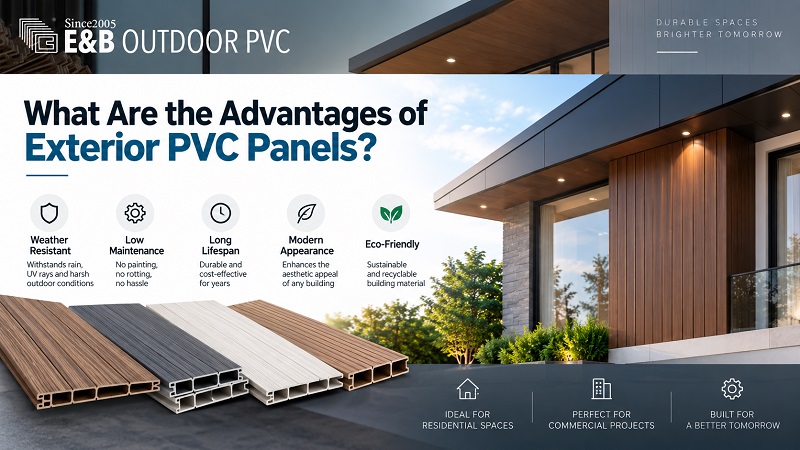
Exterior walls protect buildings from rain, moisture, sunlight, heat, cold, and daily wear. For commercial and industrial projects, the right cladding can also affect installation time, maintenance, appearance, and total cost.
That is why many contractors, developers, distributors, wholesalers, and architects choose exterior PVC panels for new buildings and renovation projects. These panels offer useful benefits, including moisture resistance, easy cleaning, low weight, and many design options.
This guide explains the main benefits of exterior PVC panels. It helps B2B buyers compare cladding materials and choose the best option for the building type, local climate, budget, and performance needs.
What Are Exterior PVC Panels?
Exterior PVC panels are construction products made predominantly of polyvinyl chloride (PVC). Manufacturers can modify the composition of such panels with additives, surface treatments, and processing methods to create panels suited to a particular purpose.
These panels come in various colors, textures, patterns, and finishes. They are suitable for cladding exterior walls, enhancing aesthetics, renovating buildings, and protecting surfaces. Exterior panels can be used in commercial, industrial, and residential construction.
When it comes to business-to-business projects, the choice of exterior panels should factor in the local climate, building type, installation method, local regulations, and product quality.
The Advantages of Exterior PVC Panels
1. Strong Weather Resistance
PVC panels stand up well to common outdoor conditions. Good-quality panels handle rain, humidity, and temperature swings without much trouble.
That makes them a solid pick for buildings with exposed outer walls. Still, check the product specs and think about your local climate and install needs before you buy.
2. Low Upkeep
Many older cladding materials need regular painting, sealing, or patch-ups. PVC panels can cut down on that work when you pick the right product and install it well.
This matters for warehouses, offices, retail stores, and other large buildings. Less routine upkeep can also help property managers keep costs down over time.
3. Resists Water and Moisture
Moisture is one of the most important considerations when choosing materials for exterior walls, particularly in wet or humid environments. PVC’s low water absorption makes it well suited to exterior surfaces.
Water-resistant panels reduce the possibility of moisture intrusion. Nevertheless, the entire wall system should be properly designed and installed.
4. Light and Easy to Install
PVC panels weigh less than many traditional cladding materials. That makes them easier to move, cut, handle, and position on-site.
Easier handling helps crews move faster on jobs with tight deadlines. Actual install time still depends on the panel design, size, fixing system, and site conditions.
5. Built to Last
Good exterior PVC panels hold up well when made for outdoor use and installed the right way. Their resistance to moisture and daily weather supports long-term use on many buildings.
That said, durability varies by product. Check the thickness, material makeup, UV performance, install requirements, testing, and warranty before you place a big order.
6. Many Styles and Finishes
The modern PVC wall panels are available in a variety of designs. Based on the brand, there are lots of options for color, texture, pattern, and finish.
This allows for greater flexibility for designing commercial buildings. The finishing of panels also helps maintain consistency of the design.
7. Good Value
Cost matters on every B2B build. Exterior PVC panels offer easy handling, fast installation, and manageable upkeep — all of which help control costs.
Still, don’t judge products on price alone. Factor in the cost of panels, accessories, labor, shipping, upkeep, expected lifespan, and possible replacement.
Looking at the full project cost helps contractors and developers make smarter buying calls.
8. Easy to Clean
Most PVC wall panels have smooth, finished surfaces that clean up fast. Dust and dirt usually come off with routine cleaning methods the manufacturer recommends.
That’s useful for commercial buildings that need to keep a clean look outside. Regular checks and proper cleaning also help the wall system last.
Where Are Exterior PVC Panels Used?
PVC panels work in many settings, including:
- Commercial buildings
- Warehouses and storage facilities
- Industrial facilities
- Retail stores and showrooms
- Office buildings
- Hotels and hospitality properties
- Residential construction
- Renovation and remodeling projects
- Exterior wall cladding
The best product depends on the building’s location, exposure, design needs, and local building codes.
How to Pick the Right Exterior PVC Panels for a B2B Project
When buying, take into account the following:
- Panel thickness: Make sure it is suitable to the strength required for your project.
- Surface finish: Take into account the appearance, the texture, and the ease of cleaning.
- Weather resistance: Make sure to verify with your local climate.
- UV resistance: Make sure the panels can resist the sun’s rays over time.
- Installation method: Look at the fixing system, extras, and labor needed.
- Size panel: Select sizes that will fit for shipping and installation.
- Fire performance: Check fire ratings and local regulations.
- Supplier reliability: Assess production capacity, quality control, delivery, and support.
- Customization: Ask about colors, textures, sizes, and custom options.
- Costs: Total of materials, labor, transport, maintenance, and value.
These tests may help you avoid choosing a product because of its cost or look. They can also guide you in comparing suppliers and make a realistic budget.
Conclusion
Exterior PVC panels handle rain, heat, and moisture well. They are easy to clean, light to carry, and come in many styles. They also install quickly. That makes them a solid choice for commercial, industrial, residential, and renovation projects.
Contractors, distributors, developers, and wholesalers can use PVC panels to build strong, good-looking finishes — and cut maintenance costs along the way. Before you buy, compare the key product details. Think about your climate, building type, and project needs. The right panel choice can boost both how your building performs and how it looks.
If your business needs exterior panel solutions, Haining East Building Group is worth a look. As a trusted supplier, Haining East Building Group can help you compare finishes, specs, order sizes, and project requirements before you place an order.
FAQs
1. Does Haining East Building Group supply exterior PVC panels?
Yes. Haining East Building Group provides building-material solutions for businesses that require exterior PVC panels. You can discuss specifications, colors, finishes, and project requirements directly with the supplier.
2. Are exterior PVC panels good for outdoor walls?
Yes, they are effective in many wall projects for the outdoors. Just be sure to check weather resistance, UV protection, fire rating, and installation requirements. These details are important to ensure that the panels are properly suited to your building and climate.
3. Are PVC exterior wall panels easy to maintain?
Yes, most are easy to maintain. Typically, a wipe-down with mild soap and water is usually enough. Maintenance requirements may differ according to finish and the manufacturer’s instructions.
4. How long do exterior PVC panels last?
It depends on the quality of the panel, installation, climate, sunlight, and maintenance. Check the manufacturer’s product specifications and warranty for a clearer estimate.
