
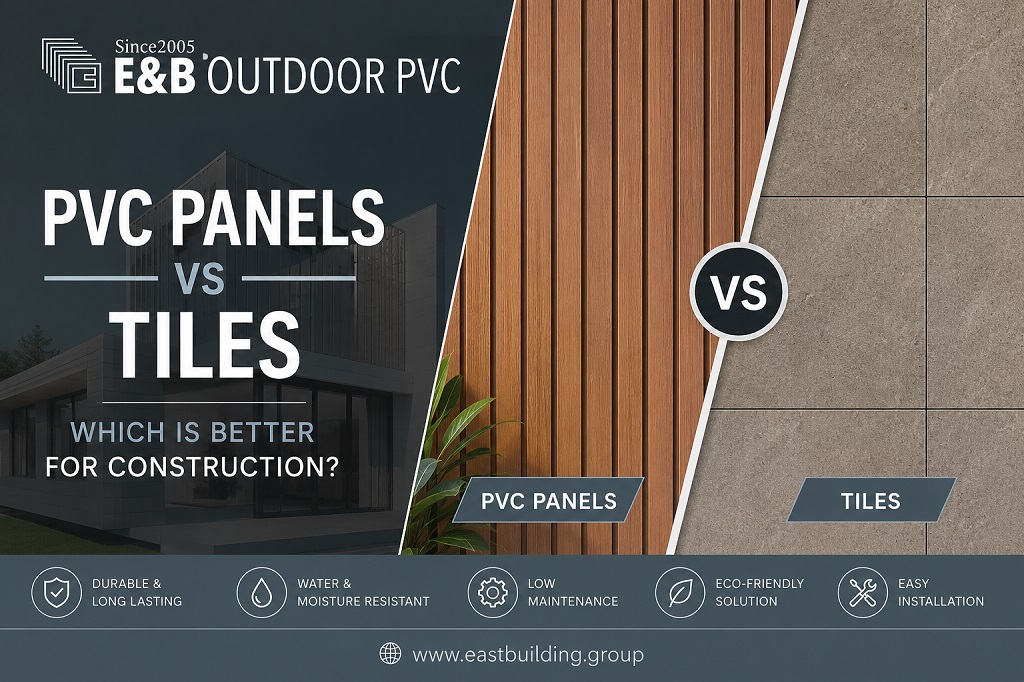
Compare PVC panels and tiles for cost, durability, waterproofing, and maintenance. Find the smarter construction solution for modern projects.
A wall finish can determine how a project performs after construction is complete. Many builders and contractors focus only on design, but real performance comes from durability, maintenance, installation speed, and long-term cost. This is why the debate between PVC panels and traditional tiles has become increasingly important in commercial and residential construction.
Today, project owners want materials that reduce labour time, lower maintenance costs, and still deliver a premium finish. That shift is encouraging many developers to turn to PVC panels rather than traditional ceramic surfaces. So are tiles out of style? Not exactly.
Each material has its strengths, and the better choice will vary based on project requirements, cost, and maintenance needs. Here is a practical comparison.
Why Material Selection Matters in Construction
When considering wall and ceiling materials, it is no longer just about appearance. Installation ease, moisture resistance, lifecycle cost, and maintenance requirements are all factors builders weigh before making a decision.
This is where PVC panels have become very popular across commercial projects, including hotels, offices, hospitals, kitchens, and modern residential interiors. At the same time, ceramic tiles remain a popular choice for premium and high-traffic spaces.
Understanding the distinction helps contractors and procurement teams make more informed choices.
Installation: Why Speed Matters More Than You Think
The tiling process is well defined. The wall must be prepared first. Adhesive is then applied, tiles are individually positioned with precise spacing, and grout is applied and left to dry. Any misalignment shows clearly once everything sets. A standard bathroom wall can take two to three days, and longer still if a professional is required.
PVC panels work differently. They come in large sheets with interlocking edges that click into place. In most cases, they can be installed directly over an existing wall or even over old tiles, which means no demolition, no preparation work, and no drying time. A full wall can be completed in a few hours. For large commercial projects or multi-unit builds, that speed difference translates quickly into labour savings.
Cost Comparison: The Price You See vs The Price You Pay
Tiles and PVC panels may appear to have a comparable price per square foot on the surface, but the overall picture is different. Tiles require grout, adhesive, spacers, and typically professional installation, all of which raise the total cost. PVC panels require none of that. They are easier to install, need fewer accessories, and take less labour time.
Tiles also tend to cost more to maintain over time. Grout loses its sheen, develops cracks, and absorbs moisture. Periodic re-grouting and deep cleaning are required to keep surfaces looking clean.
Durability and Moisture Resistance
Both materials offer water resistance, but in very different ways.
Tiles themselves do not absorb water. The issue is that grout can be porous. Over time, water can penetrate grout lines, particularly in showers and wet rooms. If moisture gets behind the wall, it can lead to mould formation, staining, and structural damage.
PVC panels are 100% impervious. There are no grout lines and no gaps for moisture to enter. This is a significant advantage in high-humidity environments such as bathrooms, commercial kitchens, and coastal buildings. Quality exterior-grade panels can also resist cracking, temperature changes, and impact without requiring special treatment.
Conclusion
Ceramic tiles remain an excellent choice for luxurious finishes that require extreme heat resistance and long-term durability. However, for projects where installation speed, ease of maintenance, moisture resistance, and cost-effectiveness are priorities, PVC panels are the more practical solution.
Panel-based interiors are increasingly popular in modern construction due to the ease of installation and cost savings they offer.
FAQs
Are PVC panels cheaper than tiles overall?
Yes, when factoring in installation labour, accessories, and long-term maintenance, PVC panels are generally the more cost-effective option.
Can PVC panels be installed over existing tiles?
Yes, in most cases. They can be installed directly over clean, flat tile surfaces, saving the time and expense of demolition.
Which is better for commercial construction: PVC panels or tiles? PVC panels are typically the more practical and economical solution for commercial applications where installation speed, cleanliness, and long-term maintenance are critical concerns
