
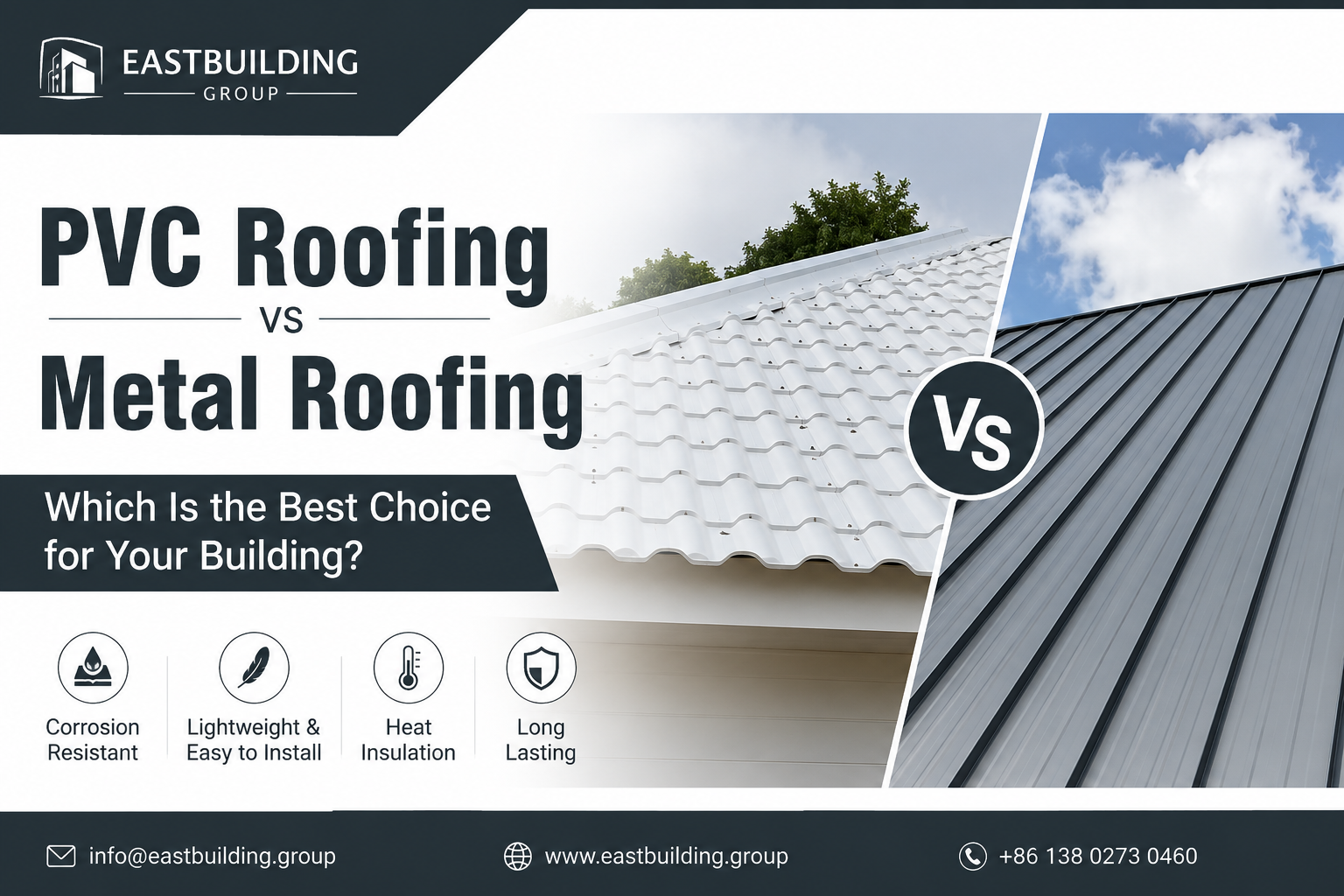
When deciding the best roofing system for a business or industrial facility, two choices consistently come up: PVC roofing and metal roofing. They are both very popular and very durable, and both have their advantages. But they’re not the same. The right one will depend on your building type, climate, budget, and long-term goals. This guide makes it all easy to understand and helps you make an informed, confident choice.
PVC Roofing vs Metal Roofing: A Quick Comparison
| Feature | PVC Roofing | Metal Roofing |
| Lifespan | 20–30 years | 40–70 years |
| Best For | Flat/low-slope roofs | Steep & low-slope roofs |
| Waterproofing | Excellent (heat-welded seams) | Good (panel joints can leak) |
| Installation | Fast and lightweight | Heavier, more complex |
| Energy Efficiency | High (reflective surface) | Moderate (needs coating) |
| Noise | Quiet | Can be loud in rain/hail |
| Chemical Resistance | High | Moderate |
| Upfront Cost | Moderate | Higher |
| Maintenance | Low | Low to moderate |
What Is PVC Roofing?
PVC roofing (polyvinyl chloride) is a type of single-ply roofing membrane. It is commonly applied on flat and low-slope rooftops of commercial, industrial, and institutional buildings.
PVC roofing membranes are heat-welded at the seams, which creates a watertight bond that’s incredibly resistant to leaks. They’re lightweight, flexible, and easy to install — making them a go-to choice for roofing contractors around the world.
They also come with strong resistance to chemicals, UV rays, fire, and wind. That’s why so many building owners in manufacturing, food processing, and logistics opt for PVC roofing systems.
What Is Metal Roofing?
Metal roofing refers to panels or sheets produced of steel, aluminum, copper, or zinc. It is suitable for steep and low slopes and is a reliable option for agricultural buildings, retail stores, factories, and warehouses.
Metal roofs are durable and strong. With proper maintenance, a steel metal roof can last 40 to 60 years, while premium metals like copper and zinc can exceed 100 years.
However, there are trade-offs to consider with metal roofing — specifically the cost of roofing, thermal performance, and noise.
Key Advantages of PVC Roofing for Commercial Buildings
1. Superior Waterproofing
The heat-welded seam waterproofing is one of the most attractive features of PVC roofing. The heat-welded seams fuse membranes together into one continuous layer. No gaps, no weakness and no spots for water to sneak in. This is a significant benefit on flat roofs where water pooling occurs.
2. Energy Efficiency
PVC roofing membranes are typically white or light-colored, which means they reflect sunlight instead of absorbing it. This will help to keep the building cool during the hot summer and save you on air conditioning usage. Over the years, this equals real energy savings.
3. Chemical and Fire Resistance
PVC roofing is designed to withstand it if your building processes chemicals, food, or industrial processes. It is resistant to oil, grease, chemical runoff, and fire — making it one of the most practical roofing solutions in industrial environments.
4. Lightweight and Fast to Install
PVC membranes are much lighter than metal panels. This puts less structural stress on the building and speeds up installation. Faster installation leads to reduced labor expenses and business downtime.
Key Advantages of Metal Roofing
Metal roofing isn’t going anywhere — and for good reason. It is here that it really stands out:
- Prospective lifespan of 40–100+ years depending on material, with proper care.
- High strength and impact resistance — will resist heavy snow loads
- Eco-friendly – recyclable: The material can be recycled at the end of its life.
- Suitable for steep-slope buildings such as agricultural structures and warehouses.
- Wide range of materials including steel, aluminum, zinc, and copper
When Should You Choose PVC Roofing?
PVC roofing makes more sense when:
- Your building has a flat or low-slope roof
- Waterproofing is at the top of the priority list.
- The chemical or fire resistance should be very high.
- Energy efficiency is important for your operations
- You want a faster, more cost-effective installation
If your building falls into any of the above categories, PVC roofing is virtually always the right choice.
When Should You Choose Metal Roofing?
A metal roof is a good choice when:
- Your building has a steep-slope roof design
- You’re looking for a roof with a 50+ year lifespan
- The building is located in a high snow or high weather impact area
- Sustainability and recyclability are priorities.
Conclusion
PVC and metal roofing are both long-lasting roofing materials, but they are used for different purposes. PVC roofing provides superior waterproofing, energy efficiency, chemical resistance, and installation, making it suitable for flat and low-slope commercial buildings. Metal roofing is well known for its long life and strength, especially for steep-slope roofs.
In the commercial and industrial markets, PVC roofing provides long-term value by providing reliable performance, reduced maintenance, and long-term cost savings for flat roof applications.
East Building Group offers top-quality PVC roofing products that contractors and developers rely on around the globe. Call the team today to speak with someone about the ideal roofing solution for your project.
FAQs
How long does PVC roofing last?
With proper installation, an acceptable PVC roofing system will serve for 20-30 years and can last even longer with proper maintenance.
Is PVC roofing better than metal for flat roofs?
Yes. PVC roofing is most appropriate for flat roofs and low-slope roofs and is known for its excellent waterproofing properties that are achieved through heat-welded seams.
What are the disadvantages of PVC roofing?
PVC roofing lasts for a shorter period of time than metal roofing and can, over time, become brittle in extremely cold climates.
Can PVC roofing withstand heavy rain and storms?
Yes. PVC membranes are highly waterproof and wind-resistant, ideal for regions with harsh weather and storm-prone conditions.
